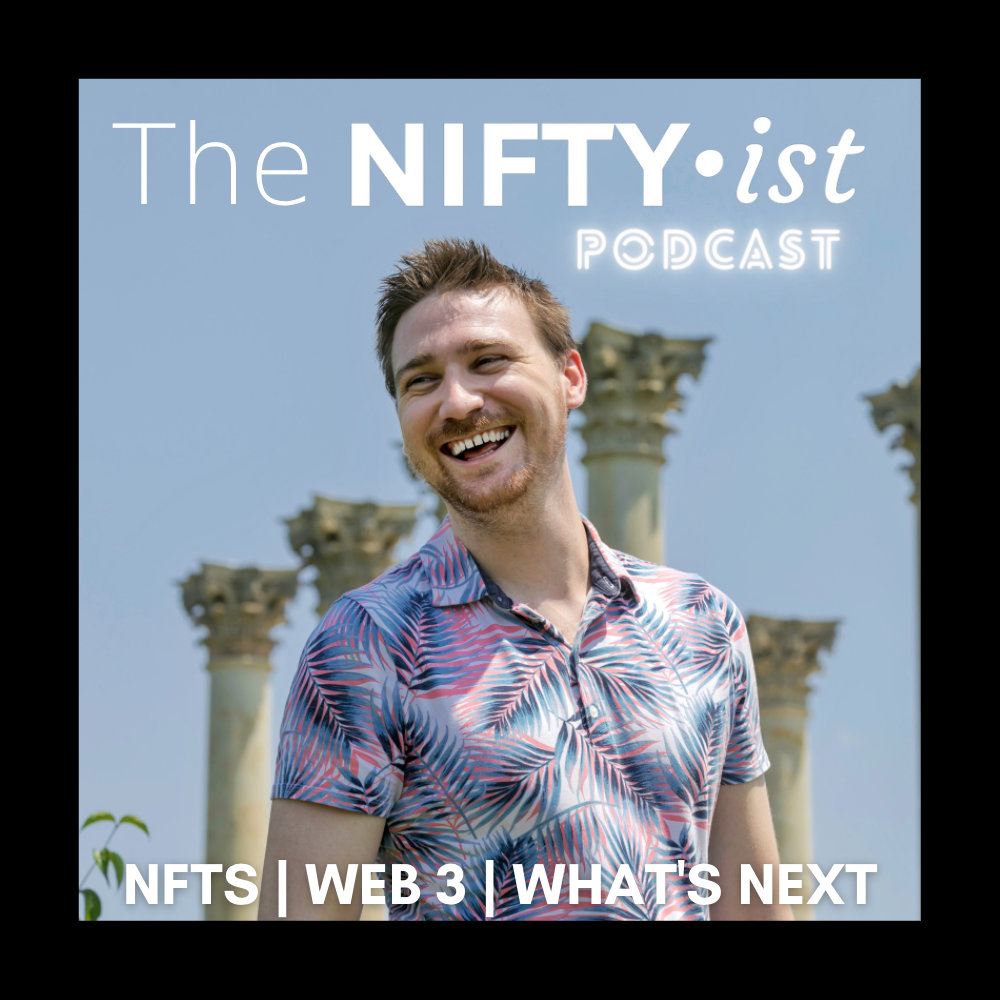
Announcing The Niftyist Podcast

For the past few months, I’ve been excitedly working on bringing to life The Niftyist Podcast – a venue for conversations with the visionaries, artists, and architects building the world of Web 3 and NFTs.

Today I am excited to say that it is finally live.
The mission of the Niftyist Podcast is to cut through all the noise and hone in on exactly what NFTs, and related web 3 technologies are useful for.

In other words, it’s all about utility.

I will endeavor to answer the question by interviewing the creators at the cutting edge of the field – the people who are experimenting, tinkering, building, solving problems, and discovering new possibilities.

Episode 1 featuring Metageist available now!

Episode 1 focuses on Metageist, aka Lee Mason, a pioneer in the world of VR and AR art. In our candid and thought-provoking conversation, Metageist speaks to how web 3 technologies are radically altering the landscape of industries including art, gaming, and content production. He also explains why NFTs were such a natural medium for his work that enabled him to spend less time teaching and more time creating. (Hint: before NFTs, there was no real vehicle for a VR artist to sell their creations.)

One of the most fascinating projects Metageist is working on is called the Cyclops. This physical object, sold as an NFT, uses the special properties of NFTs and augmented reality to allow collectors to access a curated art exhibition only available to them.

We also talk about his experimental Metaphyla series that models the evolution of eight distinct creatures within the rapidly expanding metaverse landscape. (Disclosure: I own an NFT in this series).

And he tells me the dramatic story of The Basilisk, a 1/1 sculpture that was stolen from an art exhibition the day before it was to be auctioned off. Of particular interest is why he believes the pairing of the sculpture with an NFT actually renders the physical object less valuable than it would otherwise be – because physical objects cannot command the same utility as tokenized assets.

Our wide-ranging conversation covers numerous other topics, including Metageist’s thoughts on the future of the metaverse; Metageist’s expectations on how AI-generated art will create massive disruption as soon as this year; and we play a lightning round game called “Tired or Inspired?”

You can find the first episode of The Niftyist Podcast on your favorite podcasting app. For the first episode, I have created a short version and an extended version, both of which I am making available completely for free in the same feed. I simply ask that if you enjoy the episode, please share it with a friend, share it on social media, or leave a rating or review.

Cheers – and welcome to The Niftyist Podcast.
British Museum Set to Expand NFT Offerings

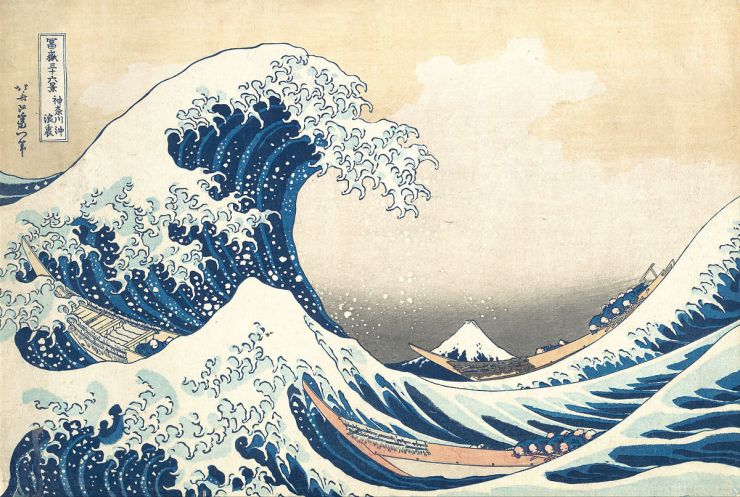
Last year, the British Museum became one of the most high-profile museums to incorporate NFTs into their collection. At that time, the museum partnered with a French startup, LaCollection, to auction 200 works by Japanese artist Katsushika Hokusai as NFTs.

Hokusai is best known for his masterpiece `The Great Wave of Kanagawa ( c 1829-1833).’ To date, the Hokusai NFTs have 501 owners, with an average sale of $465 per sale.

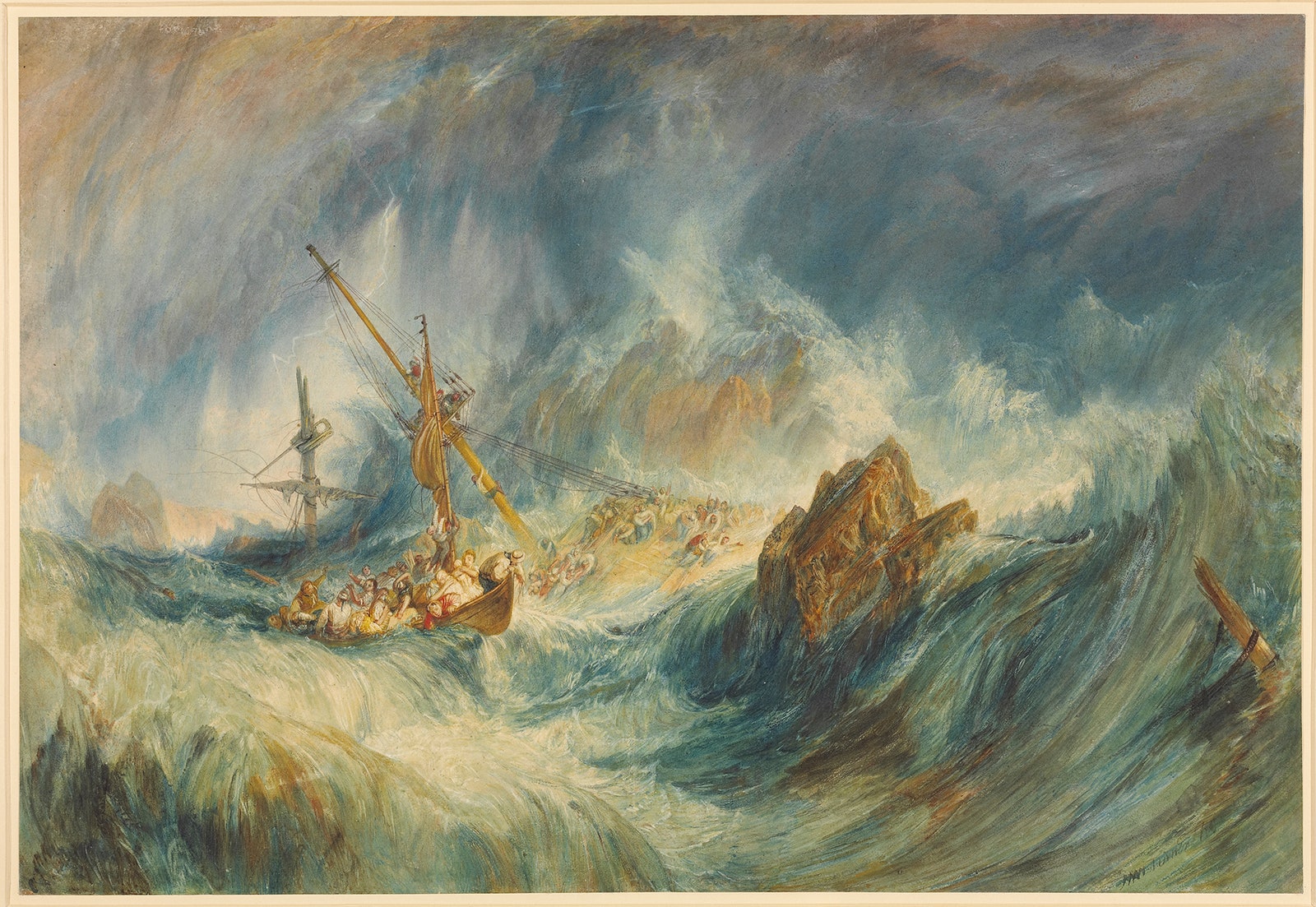
Now the museum intends to mint a follow-up collection. Beginning February 8th, the museum will again collaborate with LaCollection to offer 20 works by English artist JMW Turner as NFTs. These art pieces were bequeathed to The British Museum, by a onetime director of Christie’s auction group, Robert Willey Lloyd 1868-1958.

The museum is offering multiple editions of each work, ranging from two editions (a category they call “Ultra Rare”) to “open editions” (limited to 99 editions each). For each “Ultra Rare” offering, the Museum will keep one edition for themselves. Collectors who previously purchased a Hokusai NFT will have the first chance to buy NFTs in the Ultra Rare and Open Edition categories.

What Traditional Art Museums See in NFTs

We’re beginning to witness a relationship between art Museums and the NFT space. Why are museums like the British Museum considering NFTs?

The British Museum’s exploration of NFT sales illustrates how traditional art institutions can benefit from the technology. For example, the British Museum’s NFT collections will allow people from all parts of the world to discover and appreciate these classical artists’ artworks in the emerging ecosystems of web 3 and the “metaverse.” .

The sale also promises to build a bridge between collectors of historic art and digital art collectors. With the trending recognition of NFTs as a valid representation of artworks by respected museums such as the British Museum and the Uffizi Gallery, traditional art collectors may begin to see the benefits offered by expanding existing collections into the NFT space. And in the opposite way, NFT enthusiasts who have previously not collected physical or traditional art may now find themselves becoming interested in the historic and contemporary art collected by these institutions as they begin to collect them in digital space.

The British Museum is not the only museum that has explored the idea of adding NFT artworks to their digital halls – numerous other museums exploring the NFT space include the Uffizi Gallery, the Hermitage Museum, and the Bruce Museum.

While art museums play an important role in preserving the culture and history of nations and of the human race, there has been a steady decline in attendance at many museums recently, especially as a result of the prolonged COVID-19 pandemic. The digitization of classic and modern art offers museums a shot at recapturing some interest and attracting new audiences in an increasingly digital age.